Lowland
The underestimated region.
Scotland's most approachable
whiskies.
Light does not mean simple. The Lowlands are more complex than their reputation suggests, and more active than they have been in a century. Lighter, softer, and often triple-distilled, Lowland malts are the most misunderstood in Scotland - and, increasingly, among the most interesting. A region in the middle of a quiet renaissance.
The Lowlands cover the southern half of the Scottish mainland, from the Highland Line down to the English border, and from the east coast to the Ayrshire coast in the west. The character of Lowland malt is defined in part by triple distillation - a practice not universal but common enough to give the region a reputation for lighter, more delicate spirits. The Lowlands are floral and gentle: green grass, soft fruit, fresh barley, and a cleanliness that makes them the natural starting point for those new to single malt and underrated by those who are not.
What has changed significantly since 2010 is the number of distilleries in operation. The Borders Distillery opened in Hawick in 2018, the first legal distillery in the Scottish Borders for almost 180 years. Clydeside, Glasgow's first single malt distillery in a century, opened in 2017. Lindores Abbey, in north Fife, opened in 2017 on land where the earliest written reference to Scotch whisky - a 1494 entry in the Exchequer Rolls of Scotland - was recorded. The region is making itself relevant again.
Lindores Abbey
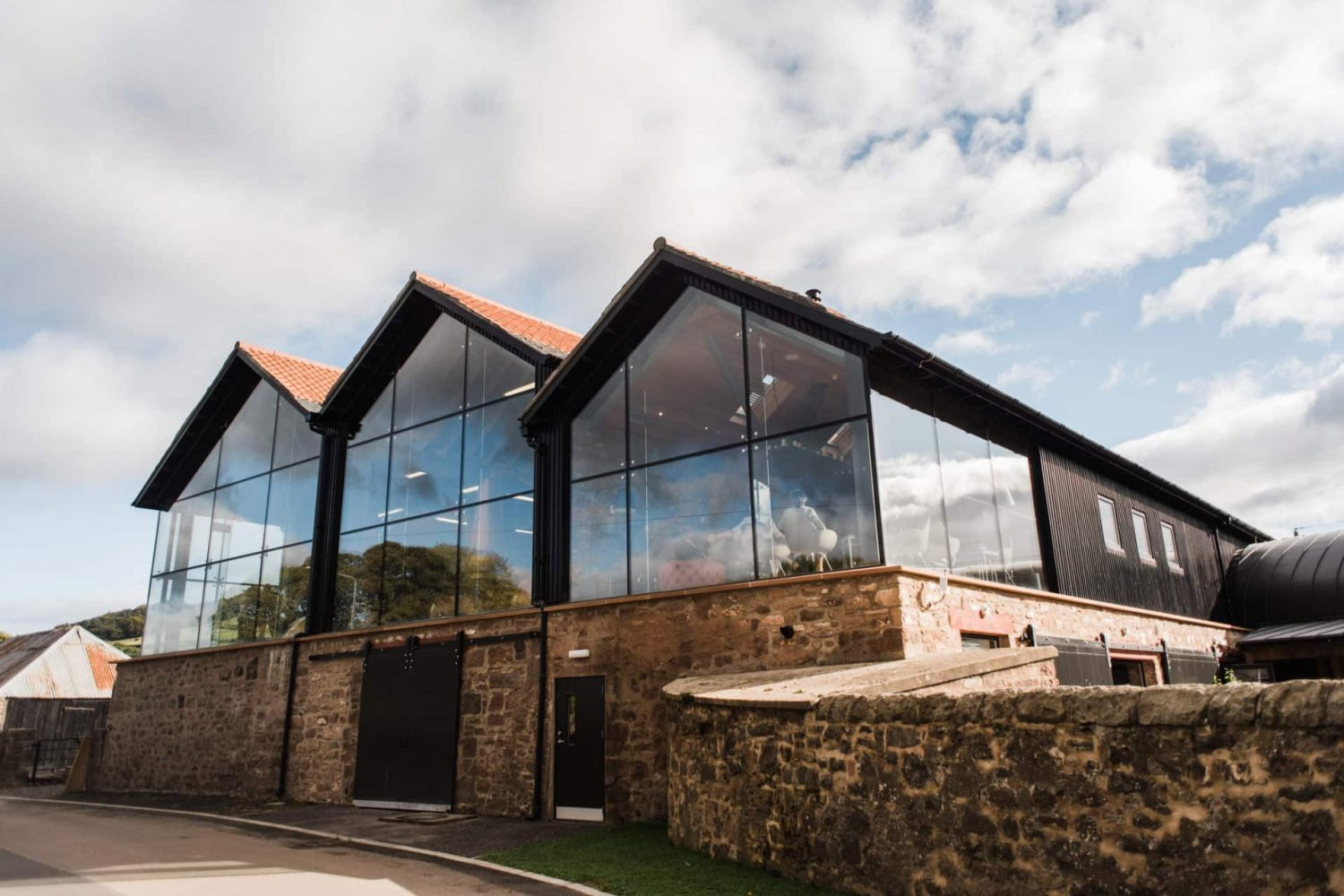
On the southern bank of the River Tay in north Fife, a few miles from Newburgh, on land where Friar John Cor received eight bolls of malt in 1494 to make "aqua vitae" - the first documented reference to Scotch whisky. The distillery, opened in 2017, is built in and around the ruins of the medieval abbey that provided that historic note. The MCDXCIV expression - the founding date rendered in Roman numerals - is the flagship and a natural collector's piece for the historically inclined.
Bottles worth knowing - Lindores Abbey MCDXCIV. Named for the founding date of the documented record. STR (shaved, toasted, re-charred) casks, which are unusual and give the spirit a distinctively spiced character. A young distillery producing whisky with real ambition
Pair with: The Old Course
Golf was documented at St Andrews from the fifteenth century. Whisky was documented at Lindores Abbey from 1494. Both sit in Fife. Playing the Old Course and visiting Lindores in the same day is to spend time at two places where something ancient and distinctly Scottish was recorded for the first time. The pairing is not merely geographic - it is historical.
Kingsbarns
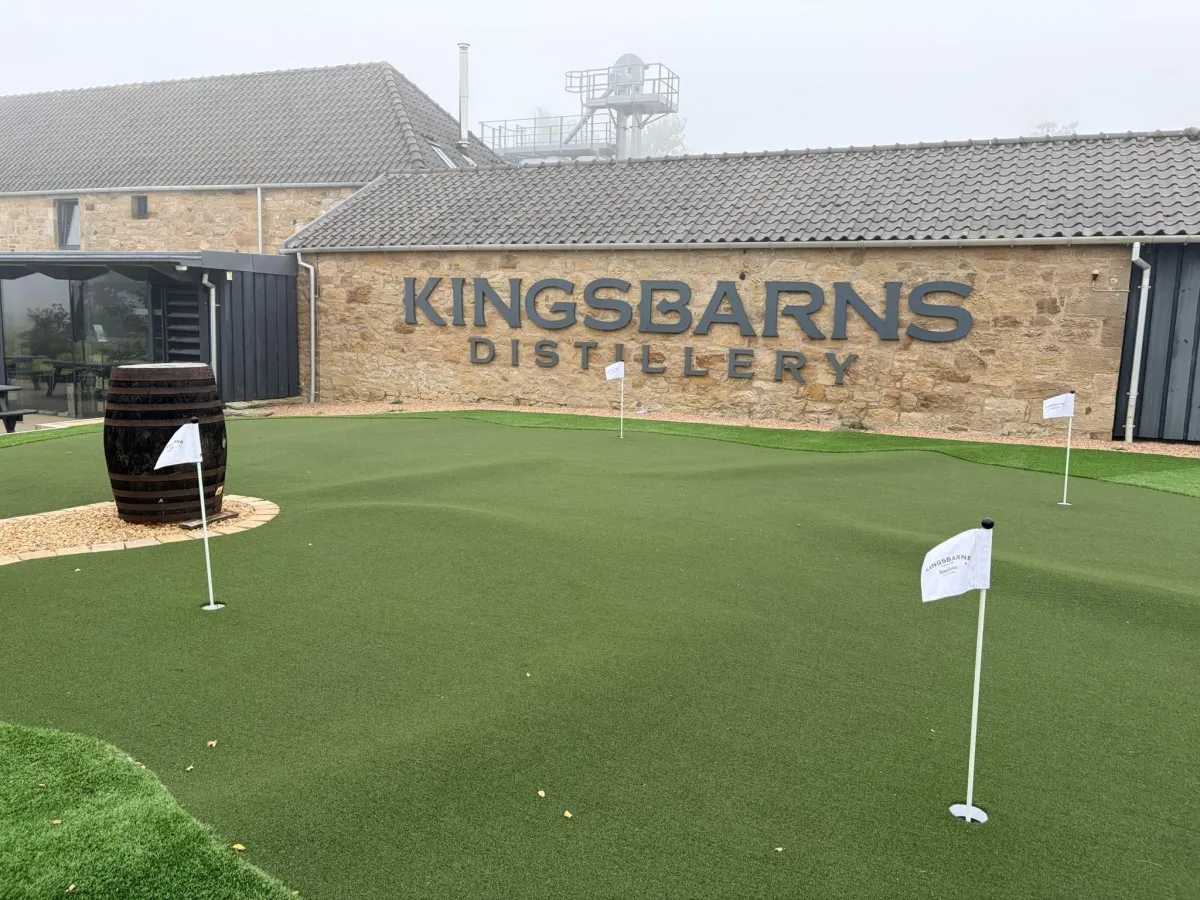
On the Fife coast road between St Andrews and Crail, Kingsbarns opened in 2014 in a restored nineteenth-century farm steading that had lain derelict for decades. The distillery produces a single malt of distinctly coastal character: light, fruited, and shaped by the sea air that moves through the East Neuk year-round. Kingsbarns Golf Links is a few minutes down the road. The case for combining both in a single day on the Fife coast requires no further argument.
Bottles worth knowing - Dream to Dram The distillery's signature release. STR and first-fill bourbon cask marriage, bottled at 46% without chill-filtration. Vanilla, orchard fruit, a coastal freshness underneath. Young whisky with genuine ambition.
Pair with: Kingsbarns Golf Links
Dream to Dram is the natural companion to a round at Kingsbarns: light enough not to overwhelm, complex enough to reward the attention you've been paying all day. The fruited sweetness of the STR cask sits alongside the same coastal freshness that the course delivers on every hole with a sea view - which is to say, every hole.
Glenkinchie
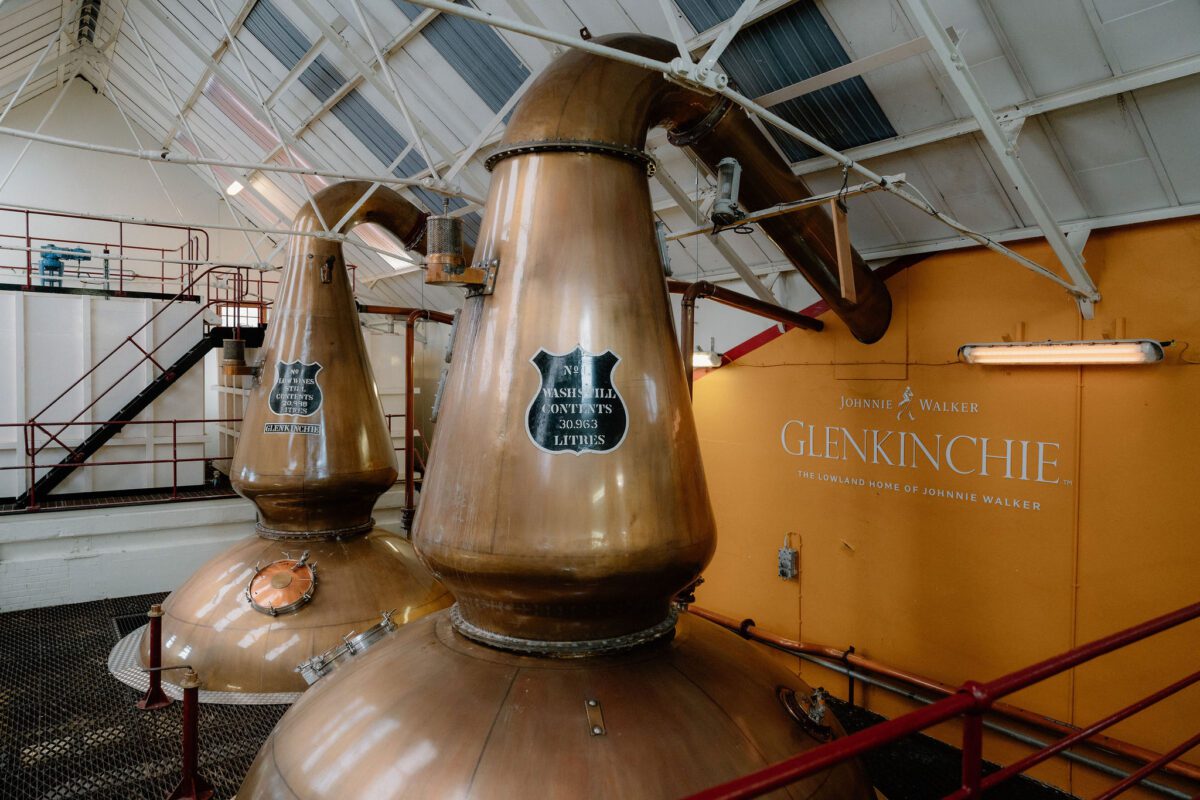
In the village of Pencaitland, twenty-five miles from Edinburgh, Glenkinchie calls itself "the Edinburgh malt." The stills are among the largest in Scotland, producing a light and approachable spirit that has made it a natural gateway distillery. The visitor centre is one of the better-resourced in the Lowlands, and the distillery's proximity to Edinburgh - forty minutes by car - makes it a natural addition to any itinerary based in the capital.
Bottles worth knowing - Glenkinchie 12 year old. The standard expression, crisp and grassy with a gentle sweetness. Best served as an aperitif or alongside food rather than after dinner. A useful illustration of the Lowland style at its most representative.