Islay
The island of smoke.
Nine distilleries, one island.
Twenty-five miles long, nine working distilleries, and a character that cannot be replicated anywhere else in Scotland. The peat, the Atlantic, the brine - Islay makes whisky that divides opinion and inspires devotion in equal measure.
Islay sits at the southern end of the Inner Hebrides, separated from the Kintyre peninsula by the Sound of Islay and from Ireland by the North Channel. It is twenty-five miles long and fifteen miles wide. The peat bogs that cover much of the island have accumulated over millennia, and the water that runs through them carries their character into every burn, spring, and well that feeds the distilleries. It is this combination - the peat, the water, the sea air, and the specific microclimate of an island in the North Atlantic - that produces whiskies unlike anything made anywhere else.
Nine distilleries currently operate on Islay. The south coast - Ardbeg, Lagavulin, Laphroaig, clustered within three miles of Port Ellen - produces the most heavily peated whiskies in the world. The north of the island, around Bunnahabhain and Caol Ila, is gentler and more maritime. Visiting Islay requires commitment and that commitment changes the nature of the experience. You are not passing through. The island receives you fully, or not at all.
Ardbeg
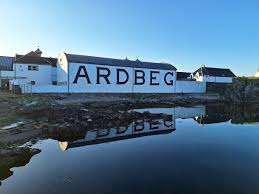
On the south coast near Port Ellen, Ardbeg produces some of the most heavily peated whisky in the world - consistently around 55 ppm phenols in the malt - and has done so since 1815, with a gap between 1981 and 1997 when it stood silent and mothballed. The revival was complete, and the distillery now operates a passionate global following. The Committee, Ardbeg's membership programme, releases limited expressions annually on Ardbeg Day - the last Saturday of May - that sell out within hours. The distillery café, in the old kiln building, is one of the better places to eat on the island.
Bottles worth knowing - Ardbeg 10 year old. The entry point, and one of the best value heavily peated whiskies available anywhere. Smoke, brine, lemon zest, dark chocolate. A benchmark expression that has barely changed in twenty years.
Pair with: Machrihanish Dunes
Machrihanish is on Kintyre, which is not Islay - but it faces Islay across the water. On a clear day from the dunes, the distilleries of the south coast are visible. The wind that shaped Machrihanish Dunes is the same wind that sweeps across Islay. Ardbeg 10 - smoke and sherry, fierce and rounded at once - matches the complexity of a course that demands everything.
Lagavulin
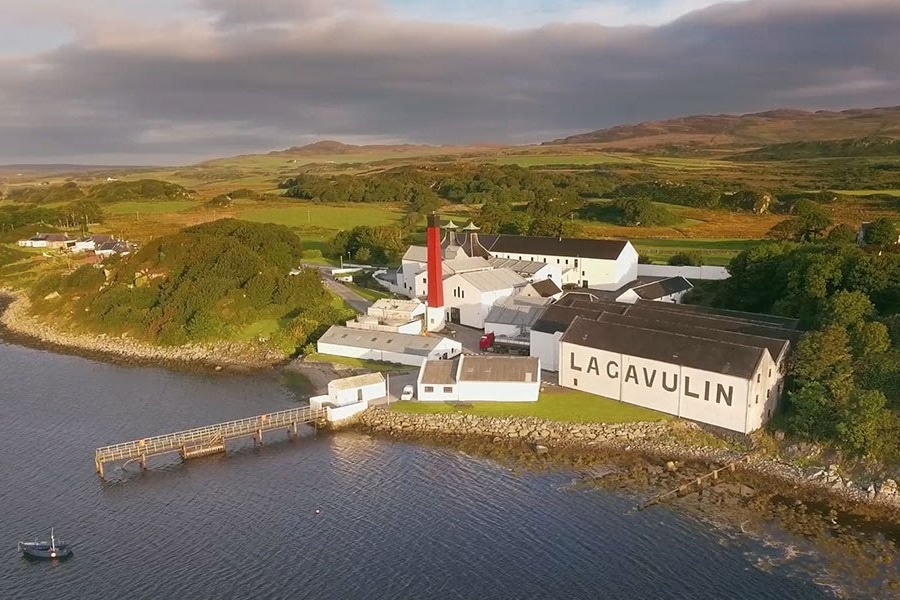
A mile east of Ardbeg along the coast road, overlooking a small bay below a ruined castle. Lagavulin produces whisky of extraordinary depth - the 16 Year Old, released at 43%, is one of the most recognisable single malts in the world, rich with iodine, dark fruit, and a long, warming peat smoke finish. The distillery was one of the first to develop a serious visitor programme and remains one of the finest. A private tasting at Lagavulin, arranged beyond the standard visitor offering, is among the most atmospheric whisky experiences available anywhere on the island.
Bottles worth knowing - Lagavulin 16 year old. The standard by which heavily peated aged whisky is judged. Forty-three percent, sixteen years, the same formula for decades. Rich, medicinal, deeply smoky, extraordinarily long finish. Non-negotiable on any Islay visit.
Bruichladdich
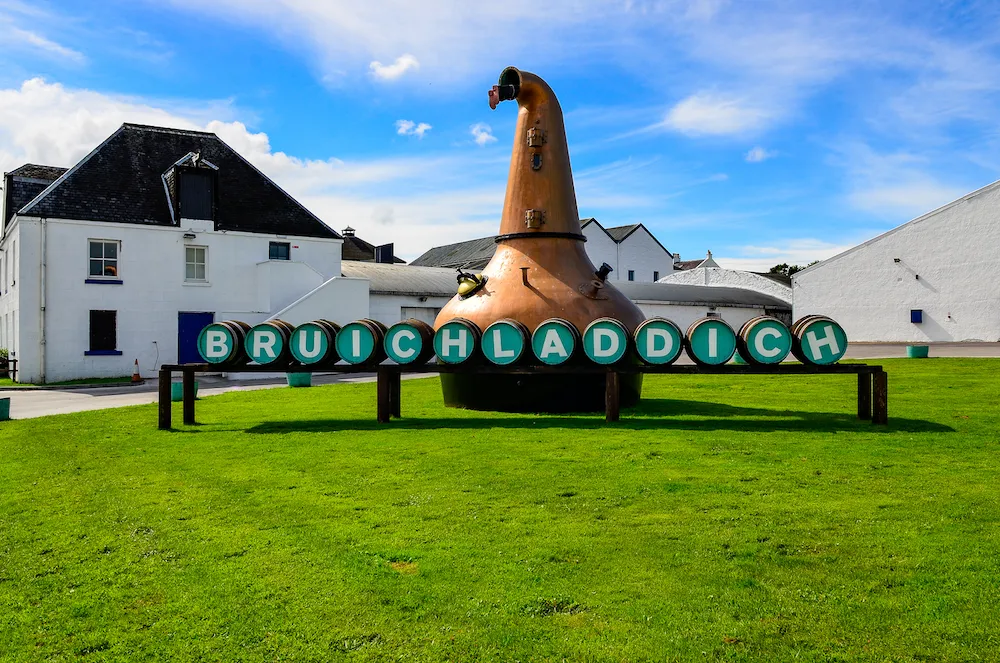
On the opposite shore of Loch Indaal from Bowmore, Bruichladdich is the most philosophically unusual distillery on Islay. It has been independently minded from the start: Scottish barley wherever possible, Scottish peat, and a commitment to transparency about provenance that is rare in the industry. The Classic Laddie is unpeated. Port Charlotte is heavily peated to around 40 ppm. Octomore - released annually in limited editions - is the most heavily peated commercially available whisky in the world, typically above 130 ppm. The distillery is also a working port; the warehouses open directly onto the loch.
Bottles worth knowing - Bruichladdich Classic Laddie. Unpeated Islay whisky, which is its own argument. Floral, fruity, coastal without the smoke. The expression that demonstrates most clearly that the island's character is not entirely about peat.