Highlands
Golf at the edge of the World.
The most remote,
The most unforgettable.
The further north you drive, the fewer golfers you encounter, and the better the courses become. The golf courses along its northern coast are among the most remote on earth: courses where sheep wander the fairways, where the green fees are collected on honesty boxes, where the only thing between you and the North Sea is the flag fluttering in a stiff breeze.
Royal Dornoch — rated consistently among the top five courses in the world, is the course that most golfers know. Designed by Old Tom Morris in 1886, it plays over machair ground above the Dornoch Firth in a setting of exceptional beauty. But the Highland golf landscape extends far beyond Dornoch. Brora, twelve miles to the north, is one of James Braid's finest designs. Golspie, a few miles further, is virtually unknown outside the region and plays beautifully. Castle Stuart — now Cabot Highlands — brought contemporary championship design to the Moray Firth in 2009 and immediately entered the conversation about Scotland's finest modern courses. Nairn hosts Open Qualifying rounds and is better than its relative obscurity suggests.
Those who make the journey this far North invariably say the same thing: that the remoteness is the point, that the landscape changes the experience, and that no other golf region in Scotland produces quite the same feeling of having arrived somewhere that matters.
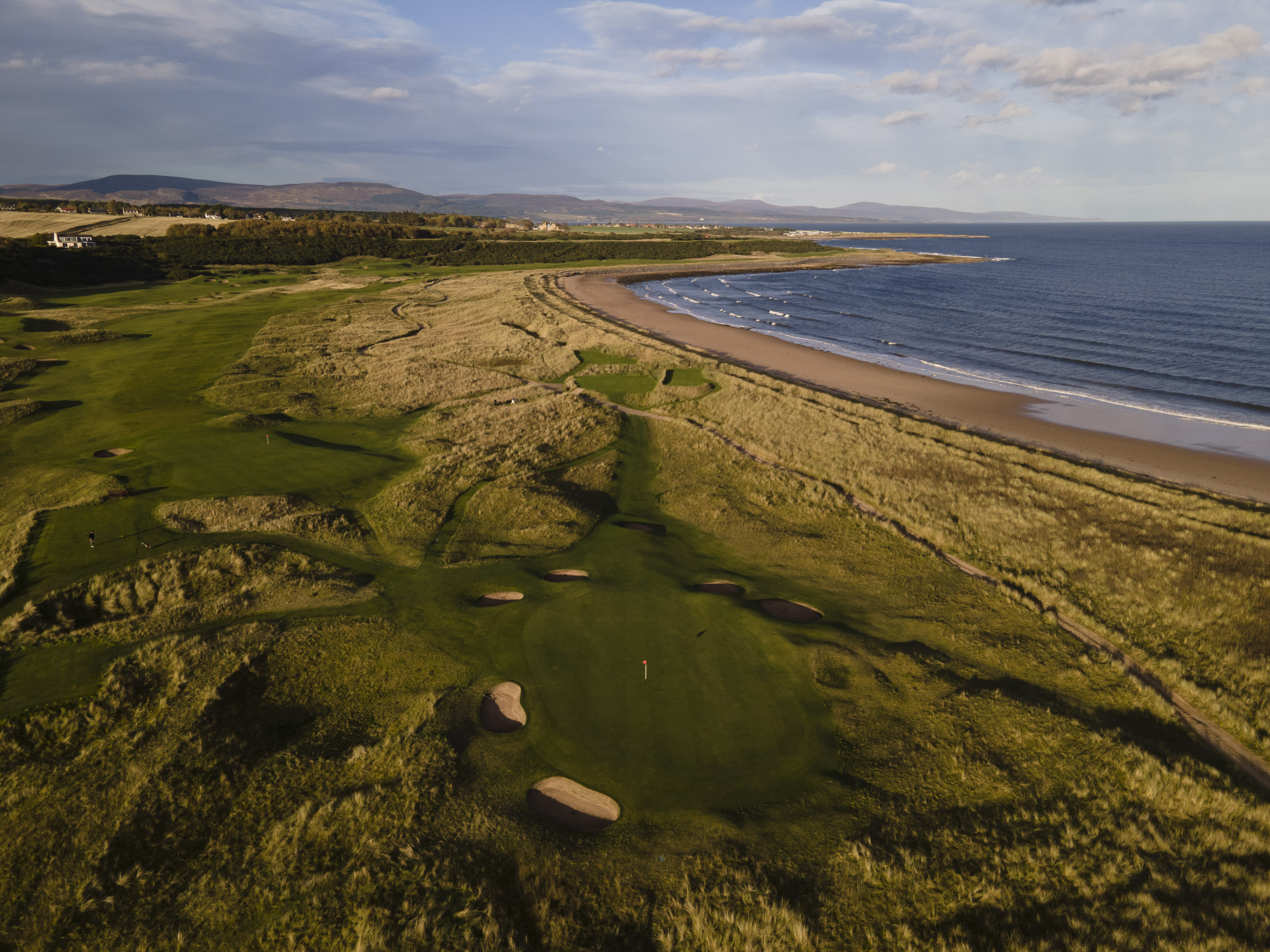
Royal Dornoch
Dornoch occupies a site of natural genius - the Sutherland machair rising in terraces above the Dornoch Firth - and plays across it without artifice. The bunkers fell where the land suggested them; the greens occupy natural plateaux; the routing follows the machair's own logic. Nothing forced, nothing manufactured. Visitor access is generous by championship standards - the club welcomes visiting golfers - and Copper & Green arranges preferred tee times and, on occasion, hosted games with members who know every break on every green.
Signature hole - 14th, Foxy: Named by Tom Watson as the finest natural hole in golf. A long par four around the curve of a hill to a hidden plateau green protected by deep bunkers on both sides. Only experience or local knowledge provides the correct line.
Pair with: Balblair 15 year old
Twelve miles apart. Both shaped by the same Sutherland landscape and the same unhurried confidence. Nothing wasted, nothing forced. The definitive Highland day.
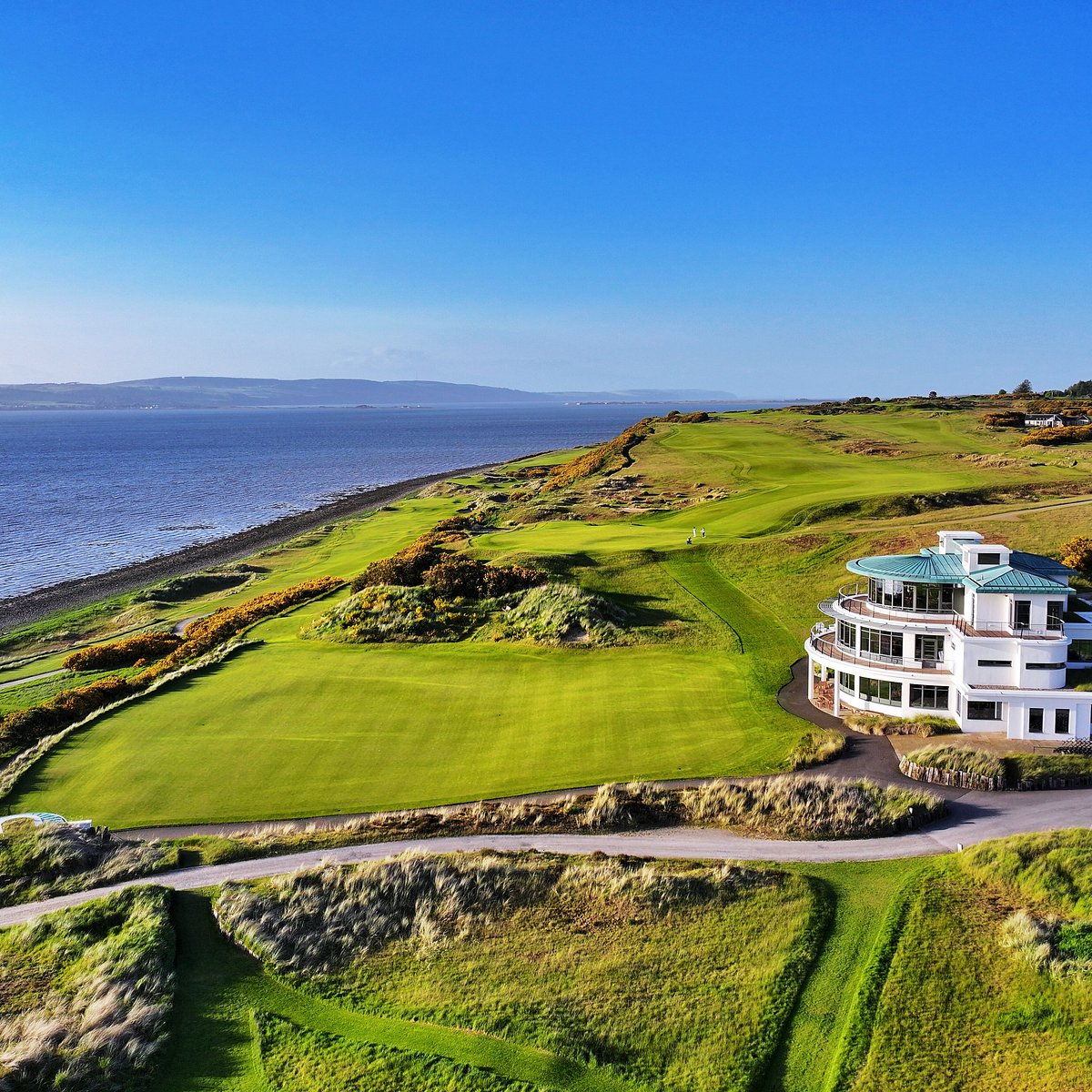
Cabot Highlands
On the south shore of the Moray Firth between Inverness and Nairn, Cabot Highlands opened in 2009 and immediately challenged the assumption that all great Scottish links golf is ancient. Mark Parsinen and Gil Hanse's design uses elevated ground above the Firth to create a course of sweeping proportions: wide fairways, natural-seeming bunkers, and views to the Black Isle that are among the best in Highland golf. The Scottish Open was held here multiple times. A second course is under development on the estate.
Signature hole - 11th: A par three from a high tee across a deep valley to a green cantilevered above the Firth. No ground game — the shot is entirely aerial. On a still day, one of the most beautiful in Scottish golf.
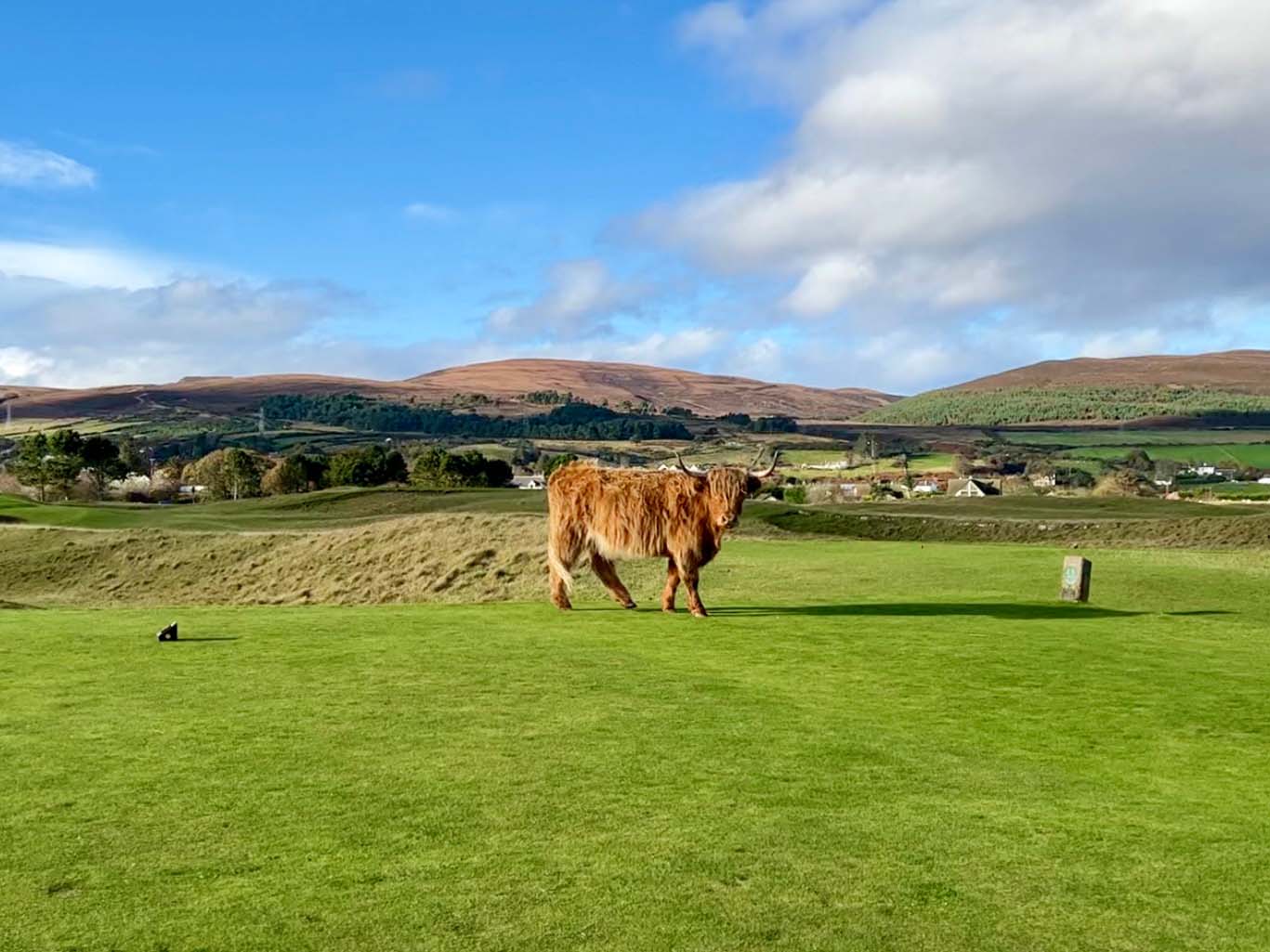
Brora
Twelve miles north of Dornoch, Brora is one of James Braid's finest designs and one of the most underplayed courses in the Highlands. The course shares its fairways with a small herd of cattle under a traditional grazing arrangement that produces turf of exceptional quality without mechanical intervention. Electric fences protect the greens. The cattle move around the golfers with complete indifference. A playing experience that is entirely and specifically Brora.
Signature hole — 12th, Tarbatness: A mid-length par four played directly toward the sea. The approach carries to a green above the beach, requiring precise distance control. One of the most naturally positioned greens in the Highlands.
Pair with: Clynelish 14
Brora has two distilleries within the town. Clynelish 14 - waxy, coastal, gently smoky - is golf in a glass: not showy, not obvious, better than you expect, impossible to forget.
Nairn
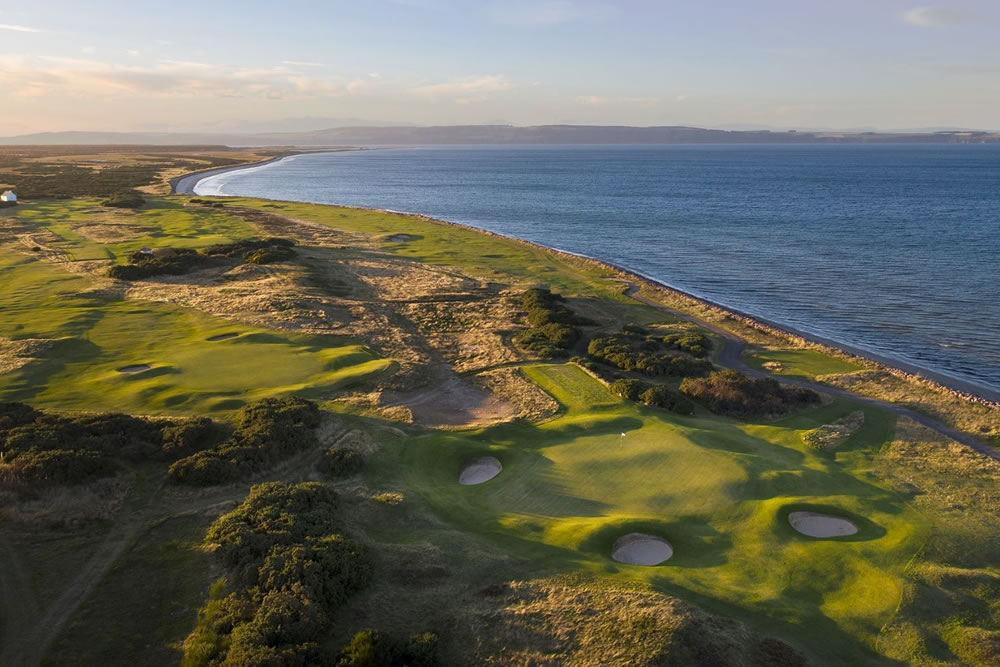
On the Moray Firth coast west of Inverness, Nairn hosts Open Championship Qualifying and has done for decades. The course plays along the coast in its opening holes before turning inland through the gorse — demanding, well-maintained, and with a character that is more direct than Dornoch or Brora but no less serious. The Walker Cup was held here in 1999. Better value than almost any comparable qualifying course in Scotland.
Signature hole — 5th: A par five along the shoreline, the Firth to the right and gorse pressing left. The drive must find a narrow corridor; the second shot must stay left of the beach. Demanding, fair, and with a view down the firth that makes a bogey almost forgivable.
Hidden Gems
Golspie
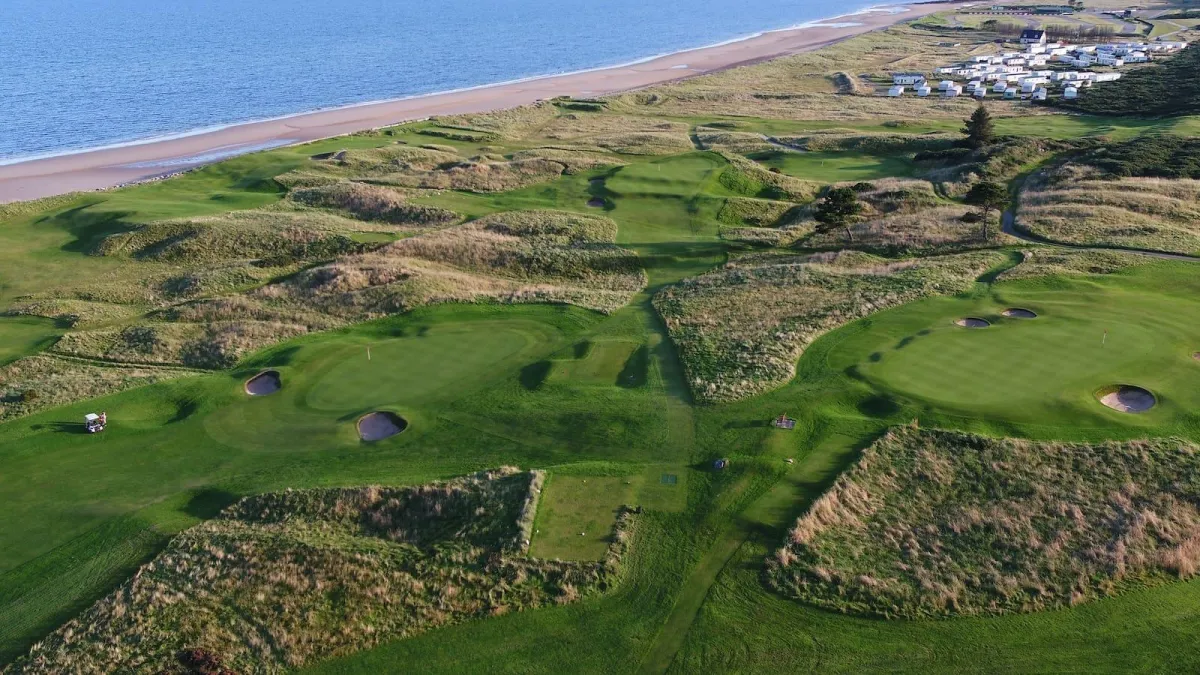
Three miles south of Brora, Golspie combines links land near the sea with inland heathland holes through the trees — rare in Scottish golf and producing unusual variety within a single round. Founded in 1889, virtually unknown outside the region, and playing to a quality that would attract significant attention further south.
Tain
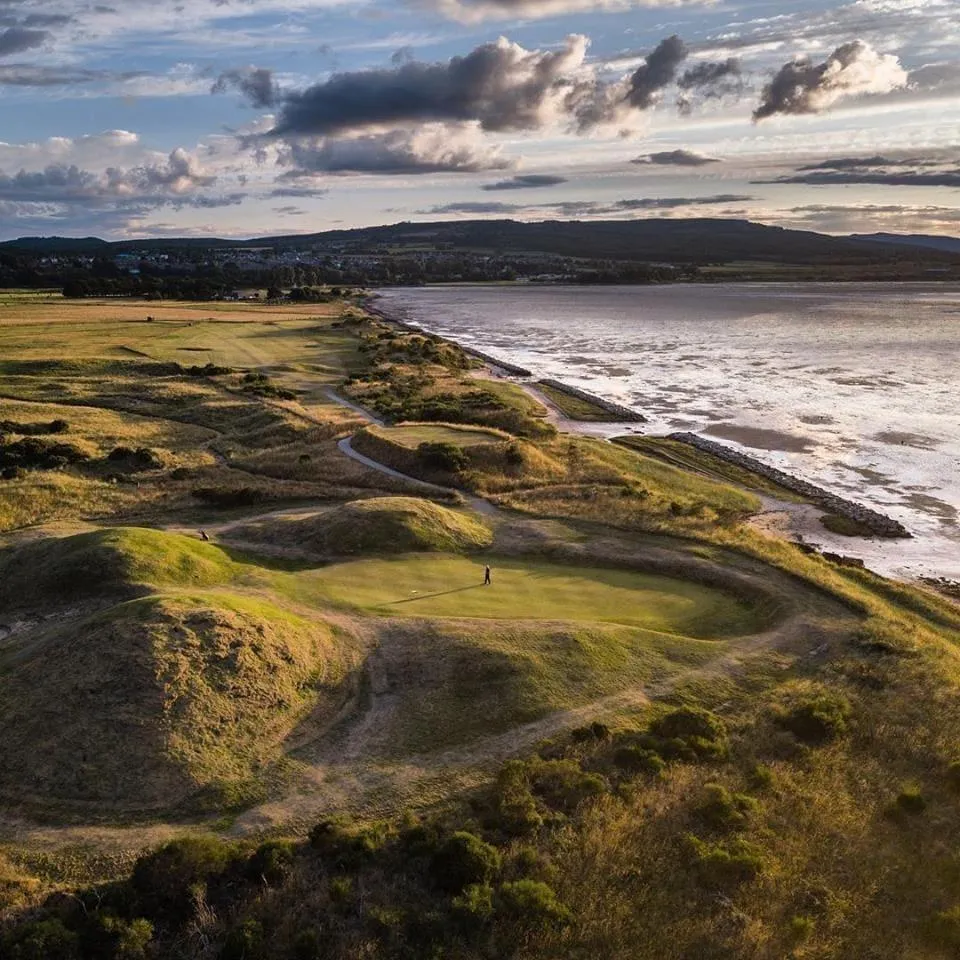
Designed by Old Tom Morris in 1890, four years after Dornoch, on the south shore of the same firth. Plays in a similar spirit: natural, understated, shaped by the land. A round at Tain followed by a visit to Balblair distillery - twelve miles away - is one of the most coherent days available in the Highlands.