Fife
The home of golf.
Where the game began.
The home of golf. St Andrews gave the game its rules, its language, and its architecture. The rest of Fife gave it everything else. The Old Course has shaped every links that followed it - and Fife's coastline holds several of the finest courses in the world within a short drive of one another.
The earliest written record of golf at St Andrews dates to 1552, when Archbishop Hamilton's charter confirmed the townspeople's right to play on the links - though the game had almost certainly been played there for at least a century before anyone thought to document it. The Old Course evolved across that time without the intervention of any single designer: its double greens, blind approaches, and broad fairways are the accumulated product of centuries of play rather than deliberate planning. The Royal and Ancient Golf Club, founded here in 1754, became the governing authority of the game across most of the world for over two centuries.
Beyond St Andrews, the Kingdom of Fife has produced serious golf since the eighteenth century. Crail Golfing Society was founded in 1786; the Golf House Club at Elie in 1875. Kingsbarns, opened in 2000 on a site dormant since 1939, extended that tradition into the contemporary era. The region's courses are geographically compact, the terrain characteristic of the Scottish east coast: low, agricultural, open to the North Sea, and used for golf for as long as golf has existed.
The Old Course
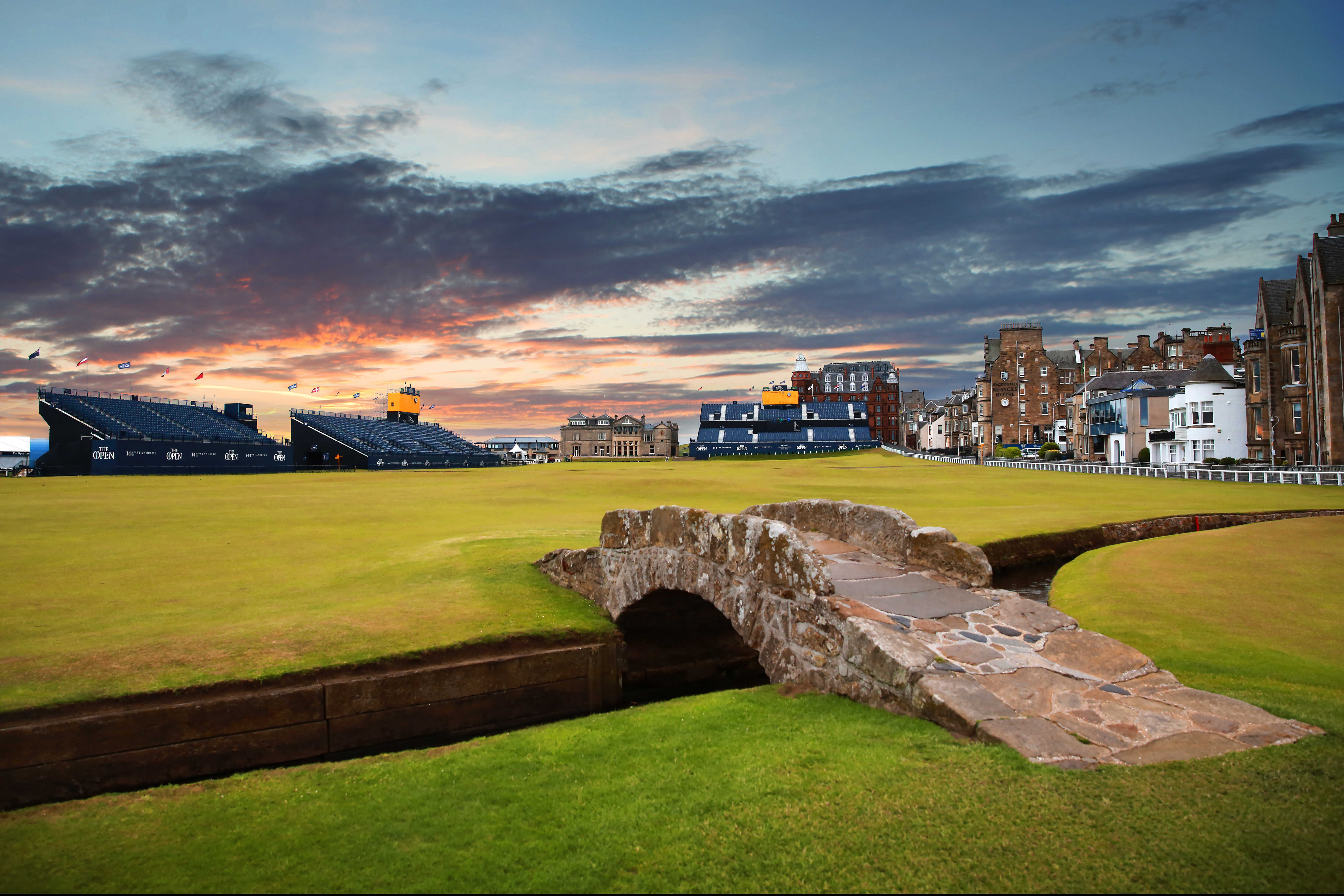
The Old Course remains the most studied piece of golfing ground on earth. Its double greens, shared by outward and inward holes, its blind approaches, and its broad fairways are the product of generations of use rather than deliberate planning. The Swilcan Bridge, the Road Hole bunker, the Valley of Sin: each carries a weight of history that is felt before it is understood. Visitor access is primarily through the daily ballot, with no guarantee of a place. Copper & Green arranges tee times through the St Andrews Links Trust and, in some circumstances, through reciprocal arrangements with affiliated clubs.
Signature hole - 17th, The Road Hole: A par four of 495 yards that has defined and ended careers in equal measure. The drive must carry the corner of the Old Course Hotel; the approach plays to a green falling to the road and wall behind. The Road Hole bunker is so deep that escape without advancing the ball is considered a satisfactory outcome.
Pair with: Lindores Abbey MCDXCIV
Both record the beginning of something. Golf was codified at St Andrews; whisky was first documented at Lindores Abbey in 1494, twelve miles north. To play the one and visit the other is to spend a day at the twin origins of Scotland's two greatest contributions to world culture.
Kingsbarns
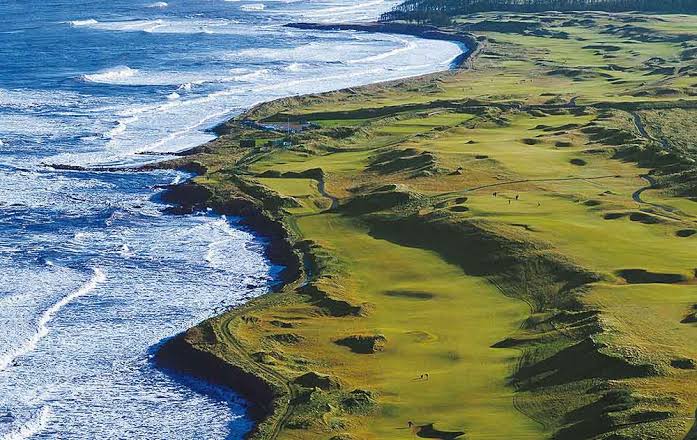
Kyle Phillips's design opened in 2000 on a clifftop site that had not seen golf since 1939 and immediately established itself among the finest modern links courses in the world. Every hole carries a view of the sea. The routing shifts constantly in relation to the wind. The greens - large, contoured, unforgiving - reward local knowledge over power. Visitor tee times are available year-round, the clubhouse is among the best in Fife for post-round dining, and Kingsbarns Distillery is a few minutes down the coast road. One of the most coherent single days in Scottish golf.
Signature hole - 15th, Cardross: A par three from a clifftop tee to a green perched above the sea. The yardage shifts with the wind; the shot required ranges from wedge to long iron. One of the most photographed holes in Scottish golf, and consistently more demanding than it looks.
Pair with: Kingsbarns Distillery
Founded by a Kingsbarns caddie, the course and the distillery also share a coast road, a name, and the same qualities: coastal freshness, contemporary confidence, and a sense of place that feels entirely authentic despite both being relatively young. A perfect Copper and Green day awaits here - 18 holes then a seamless transfer to the distillery for a VIP evening sampling some of Scotland's finest fayre.
Dumbarnie
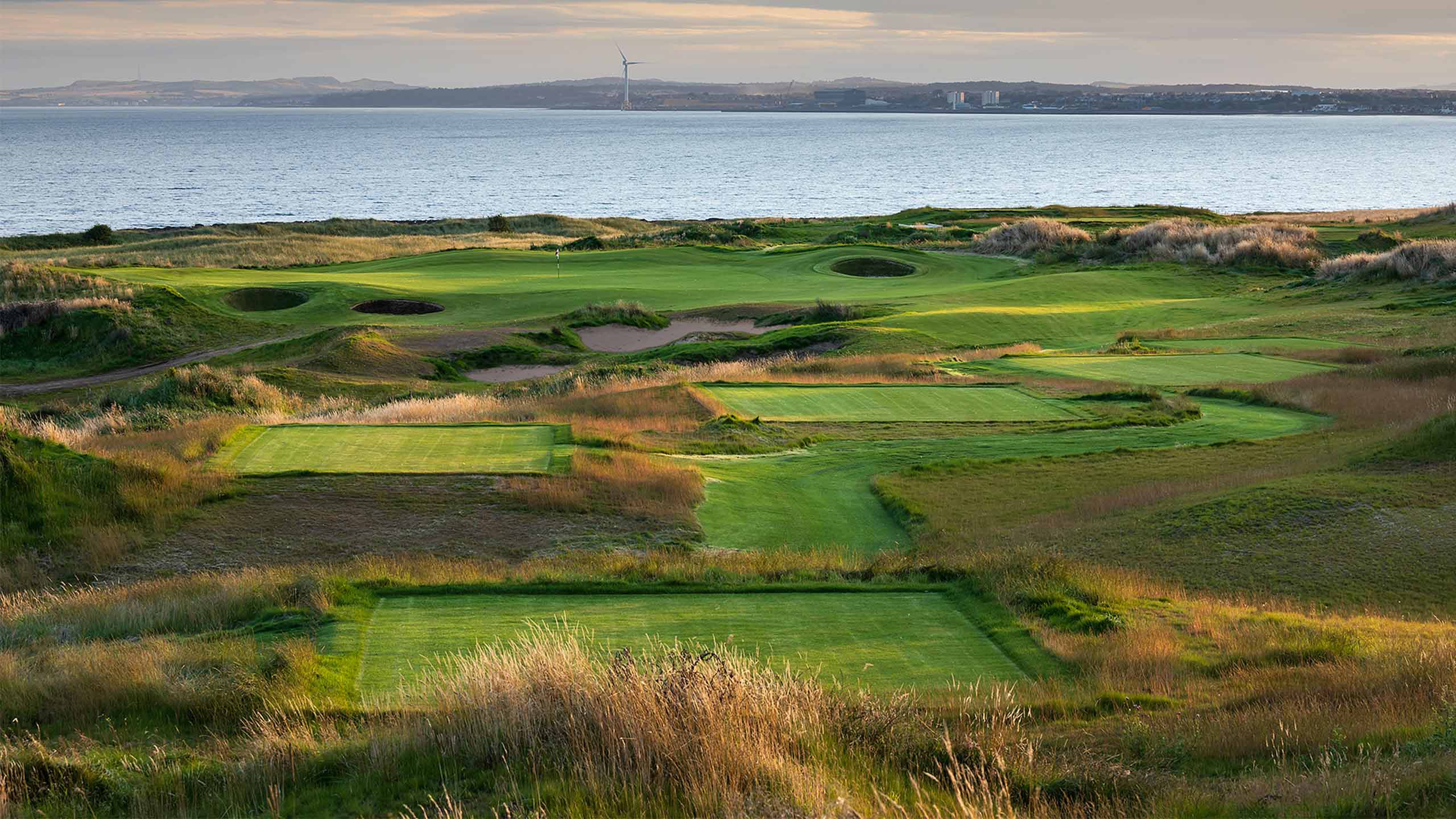
Opened in 2020 on the Fife coast between Leven and Elie, Clive Clark's design makes the most of a spectacular site above the Firth of Forth. Wide fairways, exposure to every shift of the coastal wind, and views across to East Lothian on a clear day. Still building its ranking, Dumbarnie is already regarded as a serious addition to the Scottish links canon - bold, well-conditioned, and playing with the kind of confidence that the site's natural qualities justify.
Signature hole - 6th: A long par four directly into the prevailing westerly, with the Firth opening to the right and the green exposed on a coastal shelf. The approach, into wind and toward the sea, is a precise summary of what links golf is.
Crail (Balcomie)
Founded in 1786 - one of the seven oldest clubs in the world - Crail plays over a headland that juts into the North Sea at the tip of the East Neuk. Raw, short by modern standards, and shaped by centuries of play rather than any single redesign, Balcomie has the quality that the oldest links share: a sense that the ground itself determined the game, not the other way around. Several greens sit on the cliff edge. The first hole plays directly toward the sea. Golf in its earliest, least compromised form.
Signature hole - 5th, Hole O'Cross: A downhill par three to a green below the cliffs, the sea directly behind the pin. Thrilling and entirely unfair in a crosswind — which, from a links of this vintage, is precisely the point.
Hidden Gems
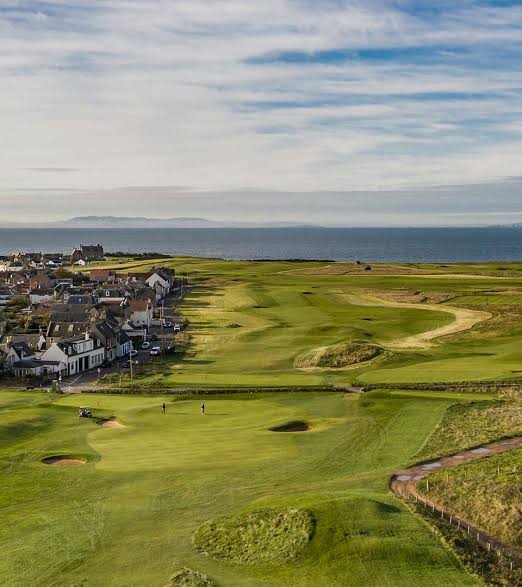
Elie Golf House Club
Founded in 1875 on ground used for golf long before that, Elie is short, quirky, and full of character. The periscope in the starter's box - installed to check whether the fairways are clear - is a tradition maintained to this day. Compact, historic, and entirely its own. The course is composed of 16 par 4's and 2 par 3's, but the variety of holes, ideal routing and stretch of coastal holes makes for a captivating round.
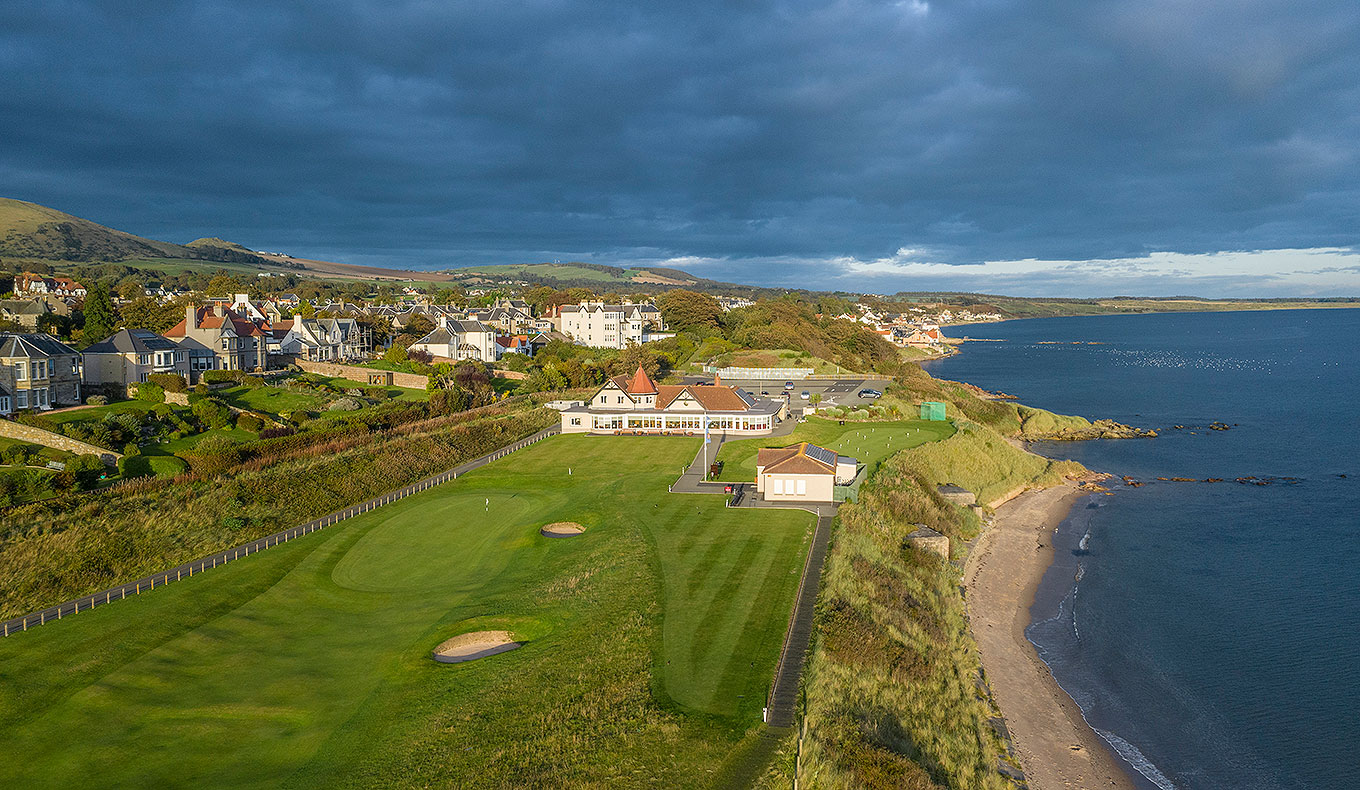
Lundin Links Golf Club
Lundin Links is a very picturesque yet challenging golf course located on the east coast of the Kingdom of Fife, with stunning views out across the Firth of Forth to North Berwick, Gullane, Longniddry and Edinburgh. Originally laid out by Old Tom Morris in 1868, it is regularly used as an Open Qualifying Venue when the tournament is held at nearby St Andrews. The fine links fairways, excellent greens, open burns and strategic bunkering make this course well worth a visit.